


Welcome back to MktContext where we study the US economy and time the stock market.
In this week’s note, we discuss the full ramifications of the US’ war with Iran. We predict the next developments, as well as oil prices and stock market direction.
This could be the dip to buy.
Admittedly, we are not geopolitical experts. We do, however, know how Trump operates and can glean his future actions.
And sometimes, the right call is to be contrarian.
Strap yourselves in because this is going to be a long one…

War with Iran
By now, you'll have heard the US attacked Iran and killed their Supreme Leader Ayatollah Khamenei. The big question mark that remains is how this will affect markets going forward. There’s a lot of misinformation (and frankly, fear) so it's important we remain objective.
To recap: The US launched air strikes on Iran after failed nuclear talks and rising civil unrest. They targeted key officials but also weapons sites. The goal being to disarm nuclear weapons, install a US-friendly government, and exert stronger control over the Strait of Hormuz — a key shipping corridor that carries significant oil supplies to Asia including China.
It's not a coincidence that China is tangentially impacted. We have previously written about Hormuz and Malacca, and the strategic importance of these two shipping corridors. Controlling the straits gives the US long-term strategic leverage in the region.
Iran’s response was aggressive, more so than the US was anticipating. Iran launched retaliatory missile and drone strikes against neighbors like UAE, Bahrain, Kuwait, Saudi Arabia. Pushing those regional partners into the arms of the US.
Iran also shut down the Strait of Hormuz and attacked oil tankers passing through. Effectively denying oil exports to the world. Oil export is the financial lifeline of Middle Eastern countries, not to mention the Asian countries which depend on the oil. So effectively, Iran has turned the rest of the world against them and backed themselves into a corner.
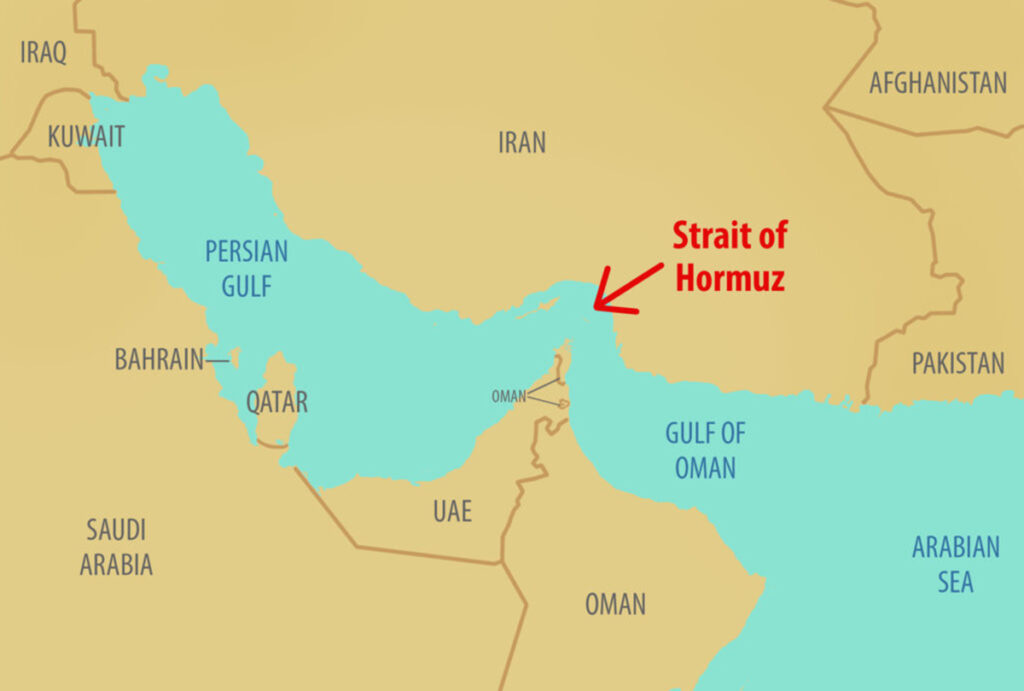
Trump was likely expecting a Venezuela-style surgical strike and quick resolution. Instead, Iran put up resistance and this fight will likely last weeks, if not months. Both sides have threatened extensive violence, which makes resolution appear to be a distant possibility.
In the meantime, global oil and natural gas prices are skyrocketing. Markets are freaking out over inflation, much like when Russia invaded Ukraine and curbed global energy supplies. Investors are fearing an extended conflict and worst-of-the-worst outcomes, but that’s where we think they’re wrong.
To see our trades and portfolio, consider upgrading to paid subscriber status.
Incentives determine actions
To understand how different parties will react, seek to understand their incentives. This will often tell you how the future will unfold.
USA: Publicly, Trump has said they won’t make a deal without Iran’s unconditional surrender, and has floated the idea of sending ground troops in. He has used the feared words, “For as long as it takes”. But of course, Trump does not always mean what he says.
Despite hardline overtures, Trump has always been against prolonged combat, particularly with a fast-approaching midterm election which he appears to be losing. An extended battle with Iran is undesirable because it threatens higher inflation (key issue for consumers), a weak global image (he already failed on Russia diplomacy and needs a win), mixed messaging on objectives (voters despise “forever wars”), and congressional challenges against his war powers.
In Venezuela, despite kidnapping Maduro, the same regime largely remains in power today. It’s a “head of the hydra” situation. But as long as the regime provides the US with oil, Trump appears to be satisfied. Therefore, a minimal change of leadership in Iran may be enough for him, even if cosmetic.
Put simply, Trump wants a quick resolution with minimal American casualties. He cares more about the appearance of change than actual substance. This mirrors his M.O. of tariff threats back in April, which were also posturing.
Iran: During previous negotiations, the regime’s demands were irreconcilable, so now they are bombing neighbors in the hopes of forcing concessions. Striking Gulf assets and Hormuz tankers hurts US allies/economy; Iran is hoping the costs are high enough that partners like Saudi or China pressure the US to negotiate.
The US and Israel together have hit more than a thousand Iranian targets in two days. For all intents and purposes, Iran’s war capabilities have been neutered. They hold the world’s oil supplies hostage, but there’s little else they can do. A lot of bark, no bite.
But the Iranian regime is vast, with sprawling layers of religious authority and armed branches. Removing Khamenei only accelerated his looming death; it did little to unseat the deeply embedded institutions that support the regime. Even as the US mows down newly-replaced leaders, the armed forces will not just go away. This means lasting regime change is unlikely — unfortunate news for Trump and Iranian citizens.
Fortunately, the regime is not looking to destroy the world. They merely want self-preservation. Like any dictatorship, they seek to retain control over policy, military, proxies (e.g. Houthis, Hezbollah), and their population. Ideally, sanctions relief as well. And they will likely give up nuclear arms to get it.
Therefore, Iran’s strategy is pretty clear: accelerate attacks to exert max pressure on Trump to end the war. Despite the bombings, Iran wants to settle. This is an existential moment for a regime that has already suffered a heavy blow. Diplomacy is the only way out.
Our prediction: similar to Venezeula, a “new” leader will emerge in Iran, one linked to the old regime. He will negotiate a ceasefire, give up nukes, and reopen Hormuz. Trump gets his "win” but the repression in and around Iran will remain the same. After all, Hamas and Hezbollah have survived far more devastating assaults than this.
The Gulf states are somewhat at odds with US interests. Saudi Arabia and Israel want lasting regime change in Iran, but Trump wants cosmetic change and a swift ending. So even if the US declares truce, Gulf leaders may continue attacks against Iran.
That said, Gulf states also have a strong incentive to end the conflict quickly. In addition to oil exports being an economic lifeline, the war also damages tourism/investment interest (e.g. Dubai) and invites proxy attacks. This is anathema to the monarchies’ stability.
China deserves a mention here as they are Iran’s biggest supporter/financier. They have been relatively restrained in their reaction to the US’ attack. Instead, they urged both sides to stop fighting.
While China is economically aligned with Iran and get much of their oil through Hormuz, their policy is to not get involved with external conflict, especially one that is spearheaded by the US. This is similar to their response to the Russia/Ukraine war, despite Russia being a perceived ally. Ultimately, they prioritize power projection on Asia and not the Middle East.
Conclusion: For Trump, the best outcome would be one similar to Venezuela, i.e. striking a deal with whoever replaces Khamenei. The deal would likely involve nuclear disarmament plus some oil concessions. Trump and his voter base have no interest in a drawn out conflict as American casualties are already mounting. So Trump will have to abandon earlier calls for regime change. For this reason, we think a conclusion to the conflict is on the near horizon.
How will this affect oil prices and stock markets? Let’s explore further…
The rest of this article is for premium members. Upgrade now to continue reading:
Trump cabinet reveals intentions
Oil prices can’t go higher
Stocks could go lower but we’re buying the dip
Claim your free trial by clicking the button below!
