

Welcome back to MktContext where we study the US economy and time the stock market.
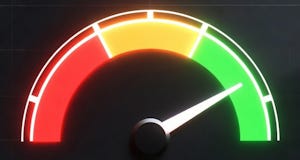
Current stock market timer: BULLISH
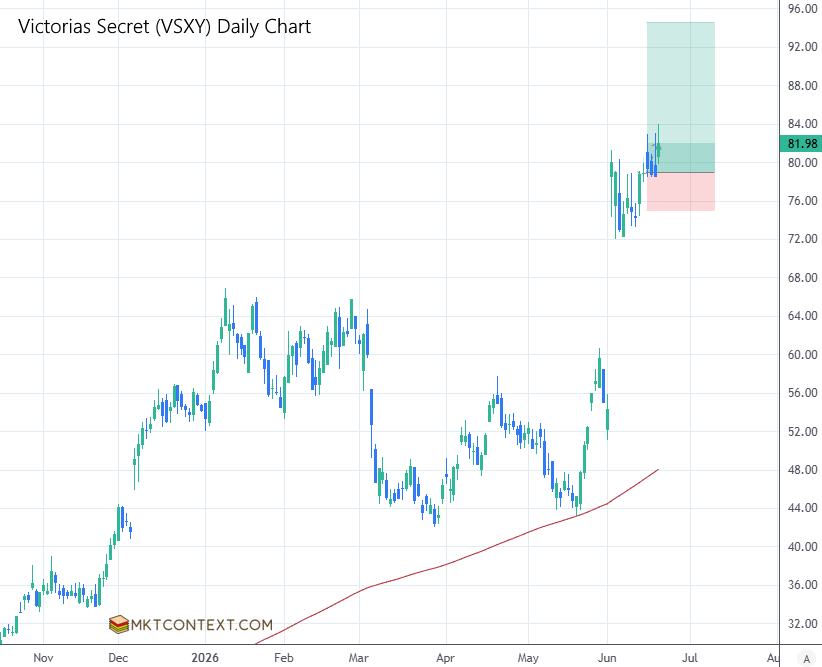
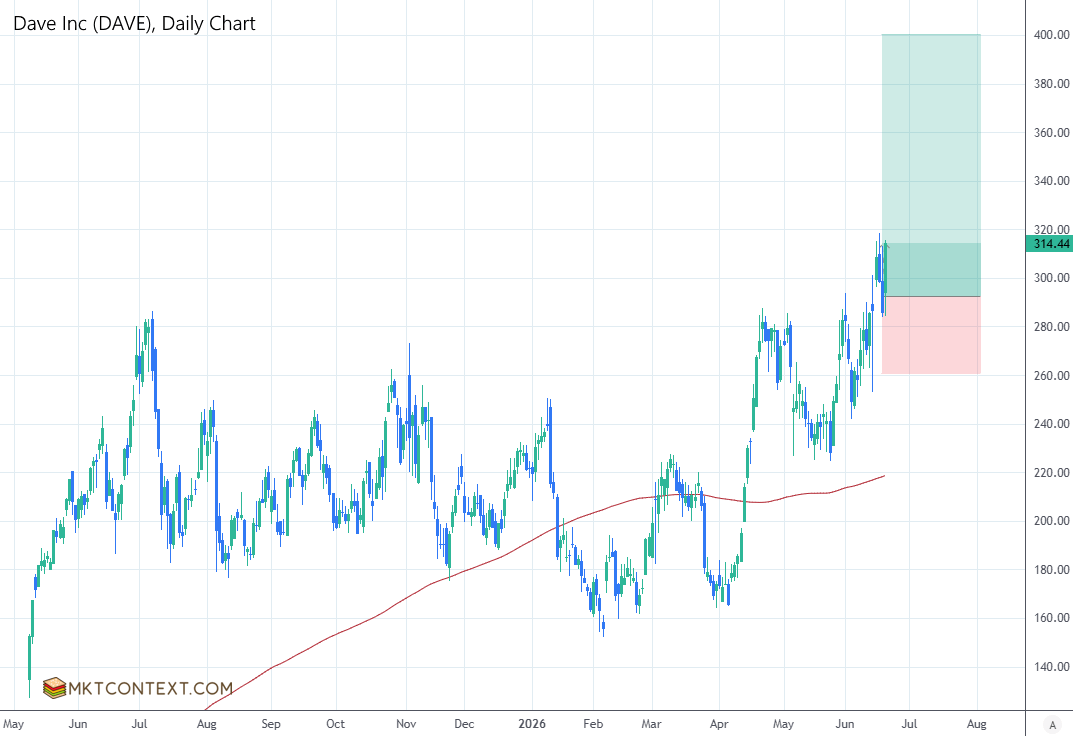
The two short-term trades we gave last week, VSXY and DAVE, are in the money. Even on days when the SPX was weak, these stocks held their breakout levels and made new highs. We would recommend selling small portions along the way as it approaches target price.
The market is very clearly signaling a rotation out of concentrated AI stocks and into cyclicals and consumer stocks. In today’s post, we explain this phenomenon as well as highlight a few stock ideas to capitalize on this broadening bull market.
Last week we correctly called the end of the SPX pullback and switched to bullish. All based on our fundamental outlook and technical analysis.

Fed chair Warsh
This week we had the first FOMC meeting chaired by Kevin Warsh. Interest rates were kept unchanged. Investors widely regarded the meeting to be hawkish (i.e., leaning toward rate hikes) causing markets to sell off. We think this was an overreaction.
In the Fed members’ projections, inflation forecasts were higher, as were rate hikes. What was previously a cut has now turned into a hike (image below). Sounds bad; however, let’s not forget that half of the members still forecast interest rates flat or lower. Warsh himself abstained from forecasting, but he certainly would’ve voted lower — forming a majority in favor of no hikes.
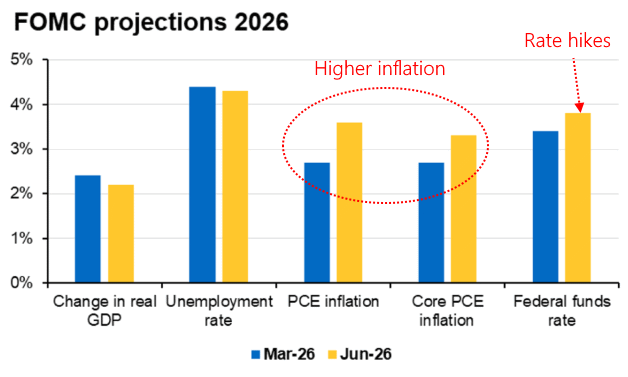
When you look more closely at the Fed members’ forecasts, they are also expecting rate cuts in 2027. This does not look to us like a unanimous Fed hell-bent on raising rates.
“…inflation has been running well ahead of the Fed’s long-stated inflation goal of 2%. That’s been going on for more than five years.”
-Kevin Warsh, FOMC Presser
Sure, Warsh spent a lot of the meeting emphasizing inflation, as evidenced by the quote above. But what people forget is that Warsh believes in trimmed mean inflation (i.e., excluding the extreme components) rather than official CPI. Trimmed mean is only around 2.3% right now; pretty close to the stated goal of 2%.
It’s no coincidence that Warsh proposed an overhaul of Fed internal processes, including data sources and the measurement of inflation. He wants to tamp down inflation by changing the definition. What better way to kill two birds with one stone (cut rates while keeping inflation low and jobs high)?
Recall Warsh’s belief that inflation is structurally falling due to AI productivity. That allows the Fed to cut rates regardless of the data.
Here are some other quotes that belie Warsh’s dovish views:
“I don’t believe we have a cruel choice.” Meaning they don’t have to choose between inflation and jobs. They can have both.
“There was one proposal on the table. There was no discussion of any other proposals.” The Fed only considered holding rates steady, and did not consider hiking.
“The price of oil… does not have first-order consequences to what we’re doing.” They are looking past the short-term spike in oil prices, not assuming it will impact inflation.
“If I look at the housing markets as one example… broadly I would say there Fed policy appears to be somewhat restrictive.” High interest rates are hurting the housing market.
Overall, Warsh was trying to build credibility on inflation control without resorting to rate hikes. That’s good news for investors because it keeps long-term interest rates in check. Otherwise, bond markets would panic, which would ironically cause more damage.
The only concern we had was his intent to get rid of forecasting. Warsh thinks the market should focus less on Fed messaging and more on economic data. He wants to leave the responsibility of interpreting data to the markets. Therefore, he wants the Fed to give as little guidance as possible.
“…financial markets perform best when they react to incoming data… The more that markets are paying attention to what’s happening in the real economy, deciding what’s good data and what’s less good data, the more financial markets can price what they believe is the most likely and what are the tail risks.”
-Kevin Warsh, FOMC Presser
When markets face uncertainty, it results in higher volatility. Long-term interest rates shift higher to reflect the uncertainty. That’s bad for stocks.
Ultimately, we think the Fed will pause interest rates for the rest of 2026. We think it unlikely that Warsh, as Trump’s appointee, would allow a hike. But the market was used to being spoon-fed (pun unintended) outlooks from the Fed, so the change in stance was a bit jarring for markets.
Warsh was given every opportunity to signal future rate hikes, but he didn’t. We don’t think hikes are a real consideration for him at this time. In other words, the market overreacted to the meeting. We continue to think short-term interest rates will come down — in the next section, we’ll structure a trade to take advantage of this view.
To see our trades and portfolio, consider upgrading to paid subscriber status.
The rest of this article is for premium members. Upgrade now to continue reading:
How to trade interest rates
Iran deal favors Iran
Technical analysis
Sector rotation under way
Our portfolio
Claim your free trial by clicking the button below!
