

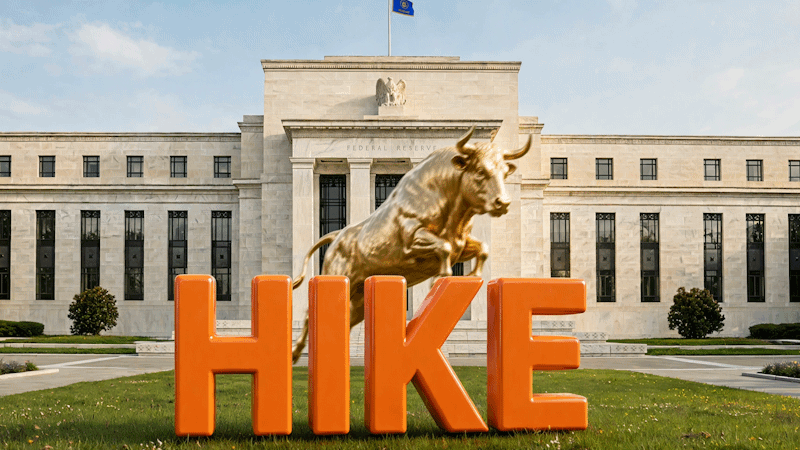
Welcome back to MktContext where we study the US economy and time the stock market.
Current stock market timer: BULLISH

Last week, we said buy the dip as interest-rate panic subsides and the SPX and Nasdaq prepare to break out of consolidation. This week offered two dip opportunities to buy: Anthropic’s pause (more below) and the Fed’s rate hike.
For months, the SPX and Nasdaq consolidated in a choppy range, weighed down by high rates and oil price fears. This week brought a capitulation and technical reversal:
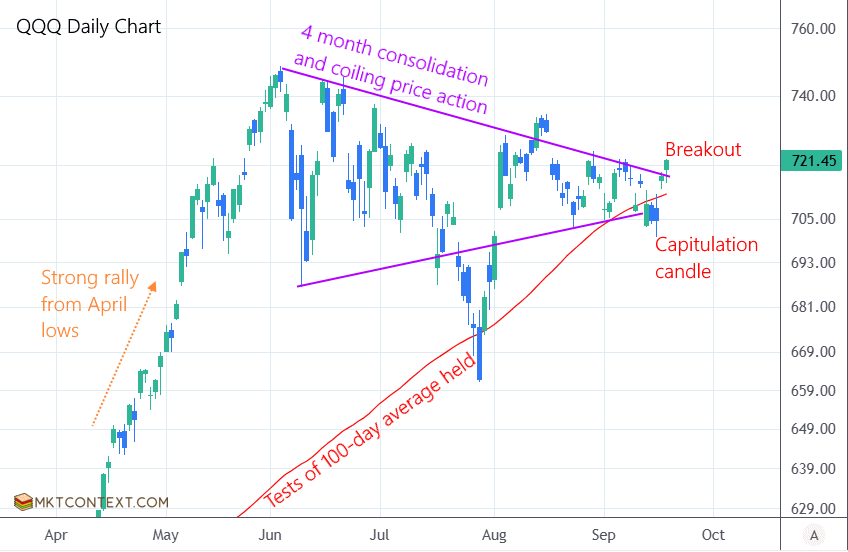
Investors mistook the Fed’s rate hike as bearish. Hikes shouldn’t be feared in a growing economy, though they do confirm an underlying rotation toward high-quality companies.
As interest rates ease and September seasonality ends, the market is well-positioned to reach new highs. A new bull market has begun.

FOMC rate hike
In a unanimous decision, the Fed hiked short-term interest rates by 0.25%. With the economy and labor market resilient, they are choosing to focus on inflation which stays stubbornly above 2% (though not accelerating).
We think this is a policy mistake, as supply shocks in oil and diesel are driving current inflation. Hikes dampen economic growth rather than increase supply. But what if supply stays constrained? The Fed will keep hiking, causing real damage to the economy.
We were wrong to expect a Fed pause. Warsh noted that financial conditions remain accommodative, and they are removing “a dose” of that accommodation. Both projections and Warsh’s remarks signal further hikes ahead.
Lower- and middle-income families will face added pressure as they contend with higher gas prices, shrinking savings, and rising debt burdens.
On the bright side, the hike should help cool long-term interest rates, which had risen since June because the Fed held rates steady during the previous two meetings. In effect, the bond market did the tightening for them. This is why stocks had been languishing since June.
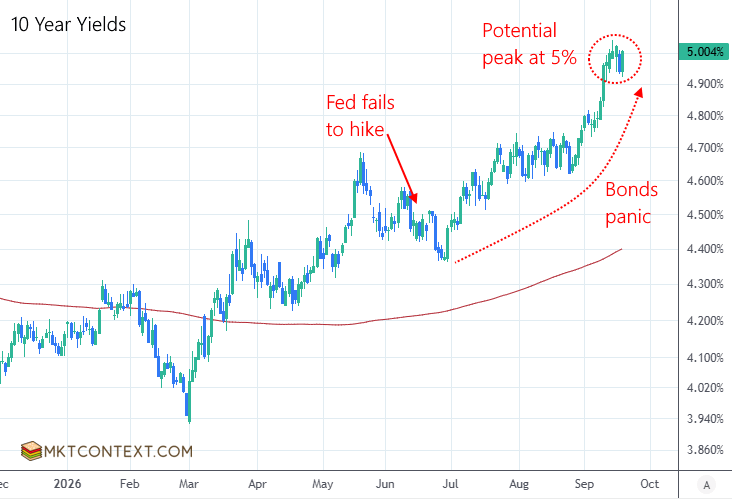
With the Fed actively hiking, the bond market can breathe a sigh of relief. The 10-year yield should, counterintuitively, fall. As yields fall, stocks should rebound, just as historical analogs showed:
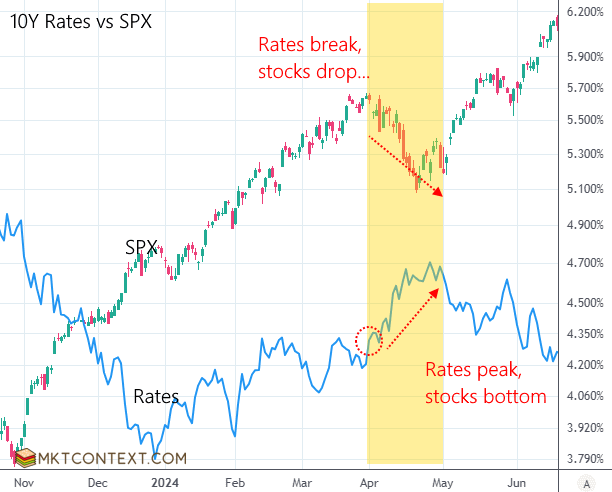
Investors mistakenly assume Fed hikes are bearish for stocks. The important driver is economic growth and corporate earnings. Stocks can thrive alongside inflation if it boosts revenue. However, higher rates constrain valuations, requiring earnings growth to sustain the rally.
To see our trades and portfolio, consider upgrading to paid subscriber status.
The rest of this article is for premium members. Upgrade now to continue reading:
Rate-sensitive stocks turnaround?
The next recession
Slowing AI development
Trades and breakouts
Our portfolio (+portfolio change)
Claim your free trial by clicking the button below!