


Welcome back to MktContext, where we study the US economy and time the stock market.
Current stock market timer: BULLISH

Stocks experienced another volatile week as long-term interest rates hit new highs, with the 10-year yield reaching 5% for the first time since October 2023.
Rising interest rates pressure stocks. The key question is whether rates have peaked for this cycle or will continue climbing. Today, we examine how stocks performed in similar historical setups.

Muse and Astra
The AI arms race continues with the announcements of Meta’s Muse and OpenAI’s GPT-6 Astra, both featuring notable advancements in agentic AI.
Muse is a full-fledged assistant integrated into WhatsApp, Instagram, and Facebook. Instead of just giving chatbot responses, it executes actions directly, like creating and placing shopping orders.
Astra, OpenAI’s next-gen flagship AI model, offers improved reasoning capabilities focused on multi-step execution, such as computer navigation and project management.
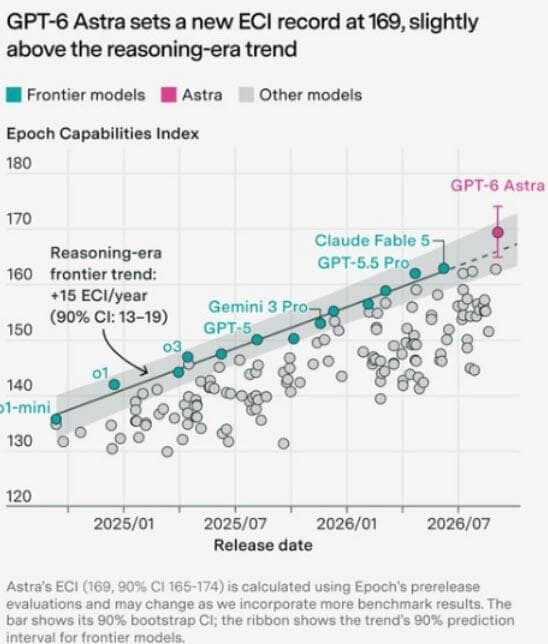
Earlier AI functioned like a librarian; ask and answer. Muse and Astra act as digital assistants. The shift requires significantly more compute, as agents run multi-step, iterative processes that plan, draft, self-correct, and refine before presenting results.
Higher compute usage is key to justifying ongoing AI capital expenditures. It is not enough to make smarter models. Industry growth relies on continuously increasing 1) the number of AI tasks, and 2) the complexity of tasks. This in turn incentivizes training even larger models.
The chart below shows that AI capability has increased exponentially for software programming tasks, which fuels continued AI development:
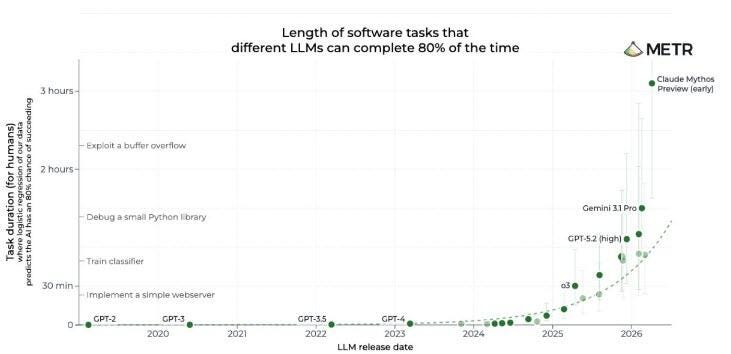
Stop advancing AI, and revenues stop growing. OpenAI becomes worthless as its spending outstrips future potential profits. So what happens when compute growth eventually hits a wall?
Eventually, the volume or complexity of AI tasks may hit diminishing returns. If a 10,000-IQ model can’t solve a problem, an 11,000-IQ model probably won’t either. Some tasks just can’t be reduced to AI.
While we remain far from this upper limit, current market valuations assume indefinite exponential growth. The AI bubble is not priced for this possibility, leaving the sector vulnerable if development slows.
To see our trades and portfolio, consider upgrading to paid subscriber status.
The rest of this article is for premium members. Upgrade now to continue reading:
Yields pressure stocks
Earnings support stocks
Seasonal weakness in flows
Technical analysis and our portfolio
Claim your free trial by clicking the button below!
