


This post is free for everyone. Paid subscribers get this every week, plus portfolio changes and stock picks.
Welcome to MktContext. We cut through noise with thoughtful macroeconomic commentary and tactical market research. Written weekly for wealth managers and active investors to navigate today’s stock markets.
Current stock market timer: BULLISH

The Utilities (RSP, XLU) and Retailers (XRT, ANF) trades given last week are in the money. These are rate-sensitive stocks that were leading the rebound, ahead of interest rates cooling.
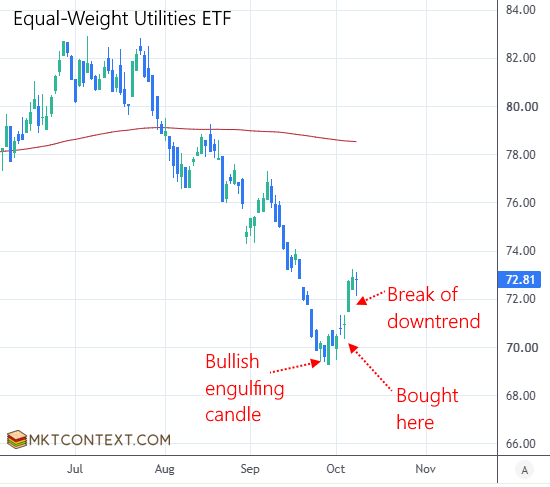
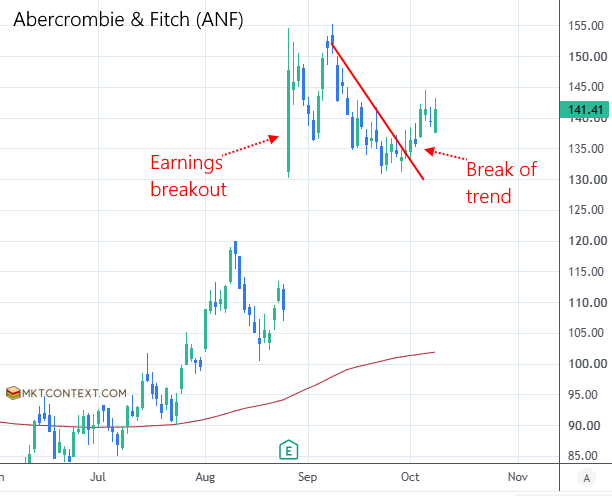
Utilities were helped by timely news announcements from Vistra and Constellation, that saw their stocks jump as much as 12% in one day. We’ve previously written about the need for data centers to bring their own power. Nuclear power is the future; we’re just along for the ride.


New all-time highs
The SPX briefly touched a new record high for the first time since August 13 before quickly pulling back. There were similar failed breakouts in the Nasdaq and Mag 7.
Beneath the calm surface, the median stock is already down 17% from its highs in a silent bear market.
The macro tide is turning. For the past week, we’ve called for a peak in interest rates, arguing that global bond markets were oversold and ripe for a relief rally. Markets finally validated that view, with the 10-year rate retreating after hitting a 24-year high.
Meanwhile, oil prices cooled despite simmering Middle East tensions, aided by export flows returning to pre-war levels and renewed diplomacy.
While the broader market catches its breath, this shift in macro is triggering a massive rotation under the hood.
OpenAI revenue miss
On Thursday, OpenAI reportedly told investors its revenues would hit $50B rather than $70B — a $20B shortfall that shocked the AI complex and triggered a sharp selloff in chips and data center stocks.
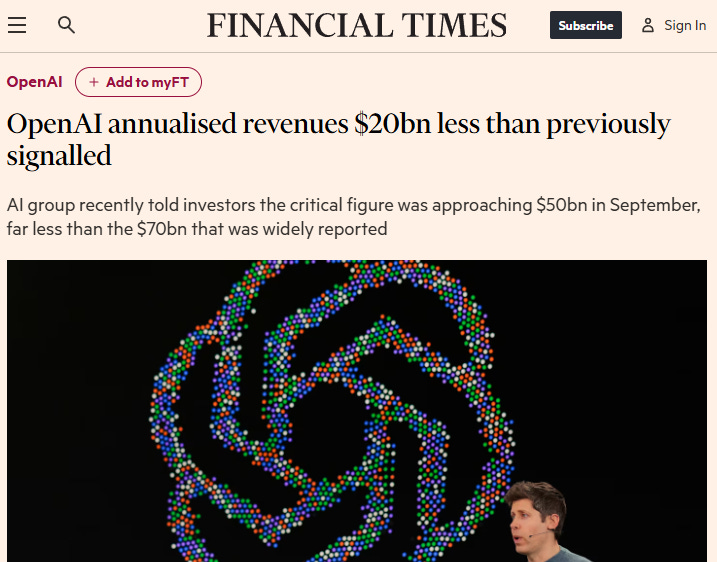
Where did the $20B go? It comes down to accounting methodology. Comparing OpenAI’s financials directly to Anthropic's yielded the inflated $70 billion consensus.
Let’s get into the weeds of the accounting:
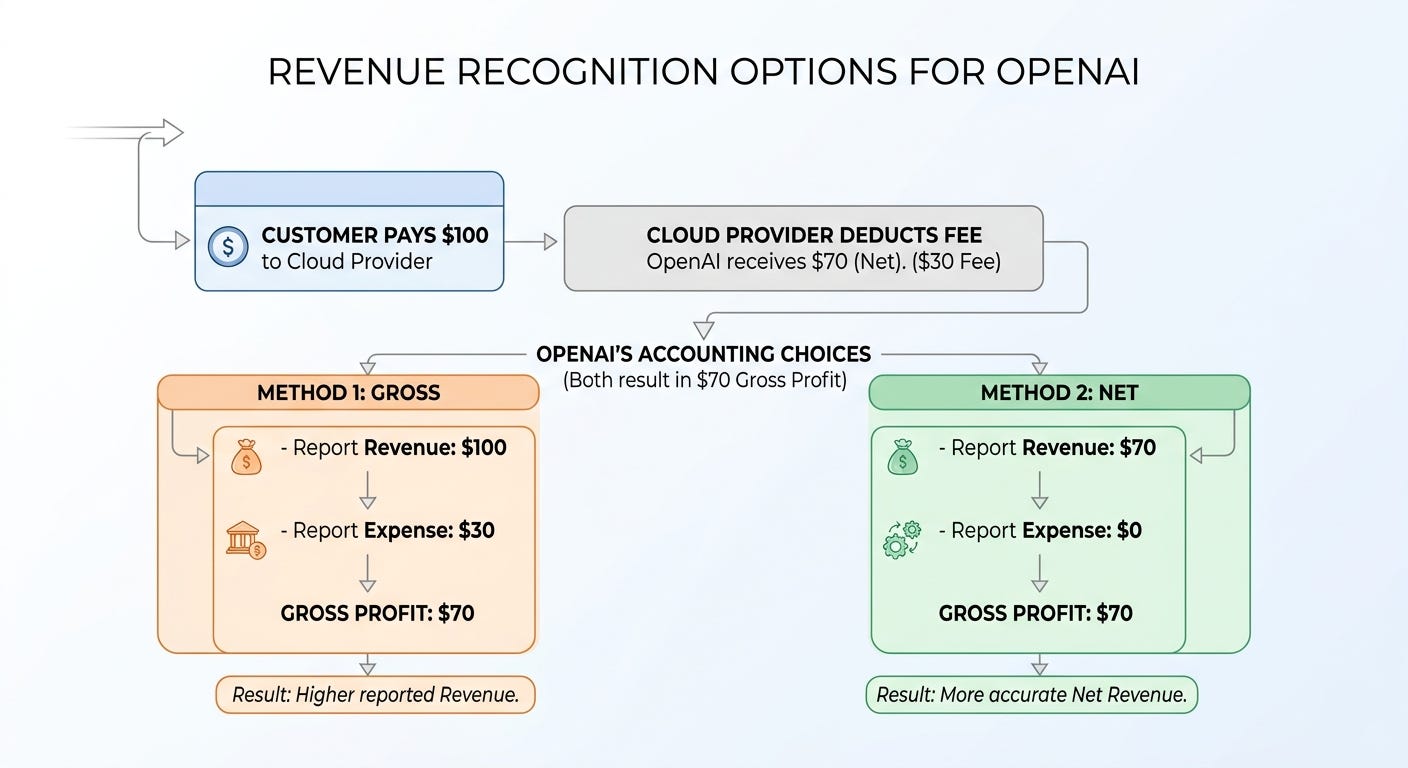
Customer pays $100 to a cloud provider to use ChatGPT. The cloud provider collects $30 as their cut and the rest goes to OpenAI.
Per accounting rules, OpenAI has two choices: Report $100 in revenues and $30 in expenses, netting $70 in gross profits.
Or, simply report $70 in net revenues and no expenses.
Both methods result in $70 of gross profit, but the former makes revenues look a bit larger.
Apparently, Anthropic chose the first method, while OpenAI chose the second. That’s why comparing the two companies’ revenues is apples-to-oranges. Financial outlets framed the $20B as a “revenue shortfall” or missed target.
Does it change the business? No. OpenAI’s net revenues still grew over 70% in recent months. AI demand is still healthier than ever.
Nonetheless, it shows investors are already jittery; with token costs falling rapidly, Anthropic “pacing the frontier”, and both OpenAI and Anthropic delaying IPOs. There is tangible fear that the AI bubble is about to burst. However, today is not that day.
French bonds?
After surging from 4% to 5%, the French 10-year interest rate is stabilizing. Populist party leader Marine Le Pen vowed to cut France’s budget deficit, reassuring creditors on the country’s fiscal position.
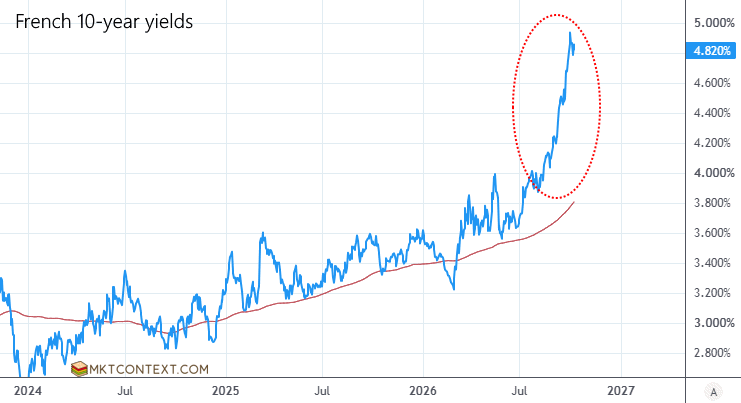
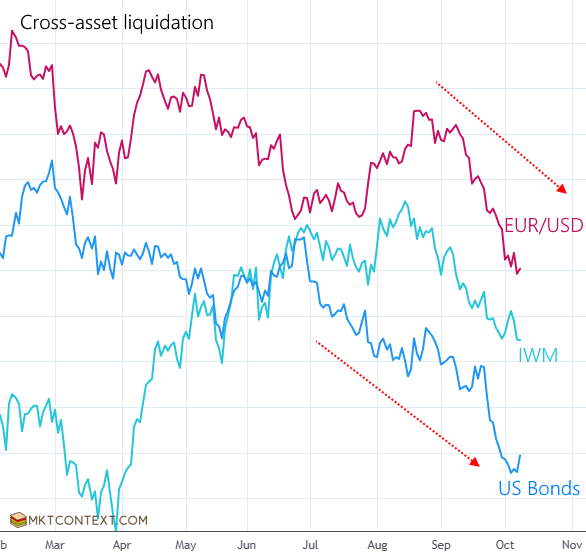
Why care about French bonds? Because international yields are linked. The relief pulled down US rates and sparked a rally in global risk assets. For the past few weeks, the market has been stuck in a cross-border bond liquidation event that bled into equity markets (or at least, the rate-sensitive sectors).
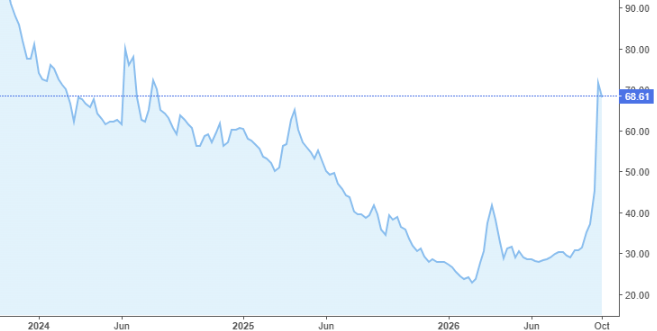
We can’t say for sure Europe’s issues are over. But we do know that markets immediately jumped to worst-case conclusions, e.g. a Euro area contagion (Italian government default swaps shown below). That reads to us as a bit of an overreaction.
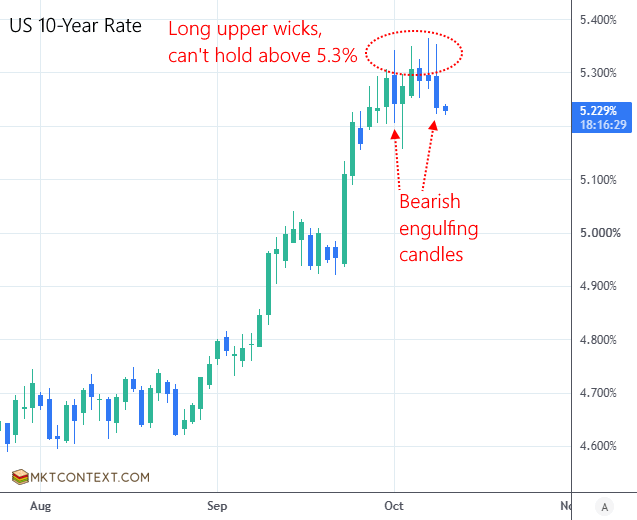
Bringing it back to the US, there are signs that yields are topping. The 10-year is struggling to hold above the 5.3% level, while the 2-year is cooling off dramatically. Odds of an October rate hike have pared back from nosebleed levels.
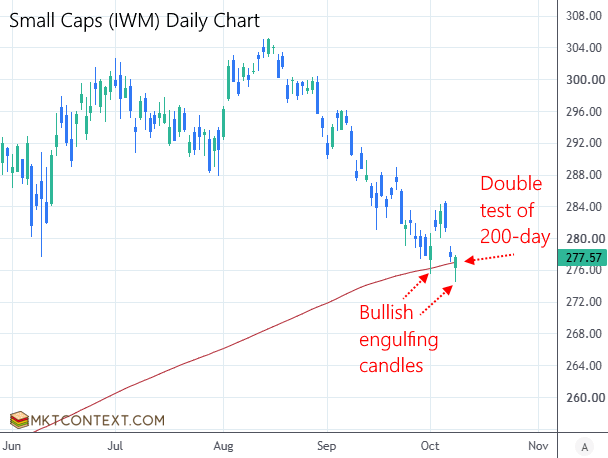
This should bode well for our rate-sensitive trades like Small caps, Utilities, and Consumers. After forming bottoming patterns last week, they are following through this week. That’s exactly what we want to see to confirm that a major trend change is underway.
Tech sector crowded
Technology was the only positive sector in September. Without it, the index would have fallen 6%. Yet as the SPX and QQQ hit record highs, the median stock is down 17% from the highs.
That’s what narrow breadth looks like: extremely few individual stocks participating in the index move. And yet the index keeps rising, driven by only a handful of heavily weighted, mega-cap stocks.
What caused this? As we explained here, interest rates rose sharply as the market adjusted its outlook for more Fed hikes. Investors fled to the stocks that historically were resilient to interest rates, which happened to be mostly tech: Mag 7, AI, and chip stocks.
As a result, these stocks are heavily crowded:
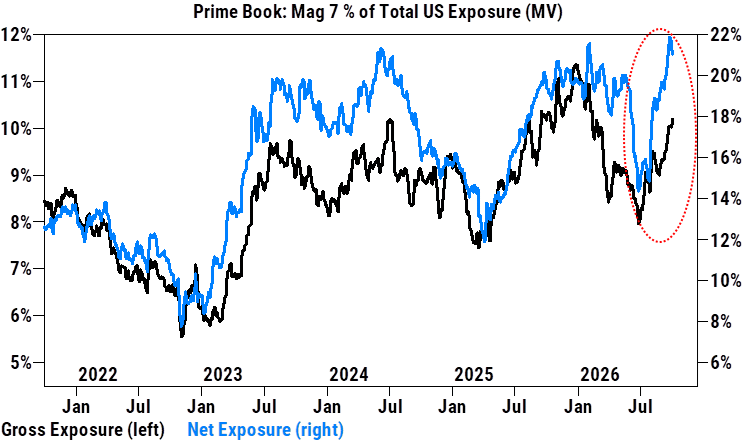
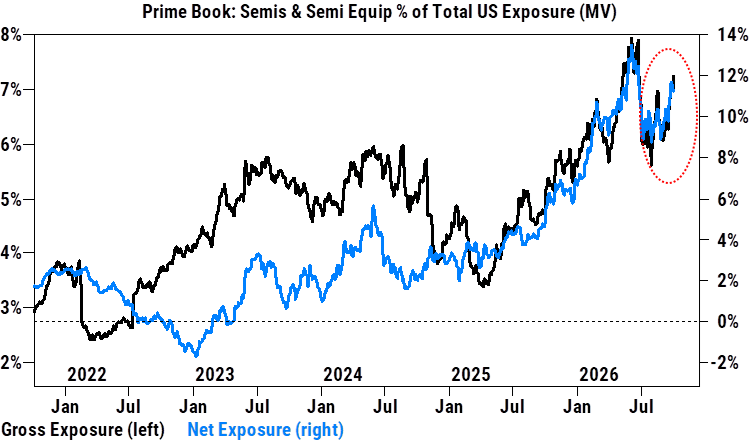
If rising rates drove capital out of rate-sensitives and into tech, then logically, falling rates should reverse the rotation. The OpenAI “revenue miss” provided the catalyst to unwind some of this crowded positioning:
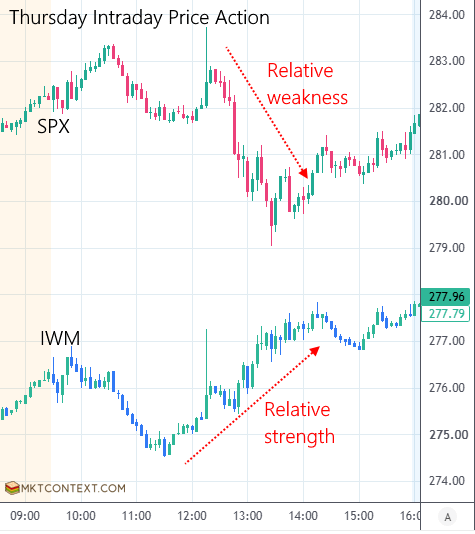
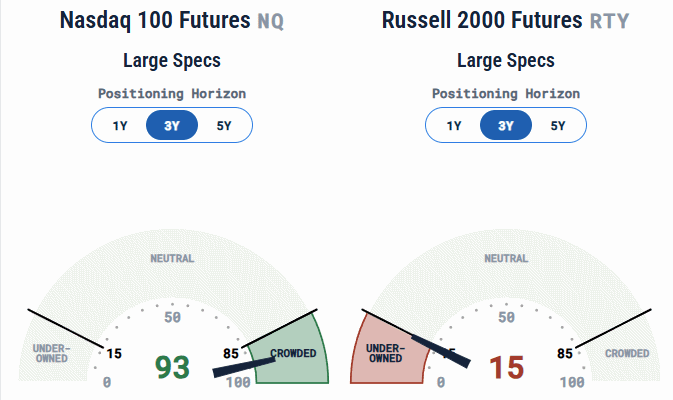
To reiterate, lower yields could mean Nasdaq, chips, and Mag 7 decline while breadth rebounds from extremely oversold conditions. Conversely, the equal-weight SPX and Russell 2000 small caps (representing non-tech stocks) are bouncing off their 200-day moving averages and forming reversal patterns.
Repairing bad breadth
We established that market breadth is weak — despite index highs, the vast majority of stocks have not participated in the rally. In fact, over half the index is in a technical bear market.
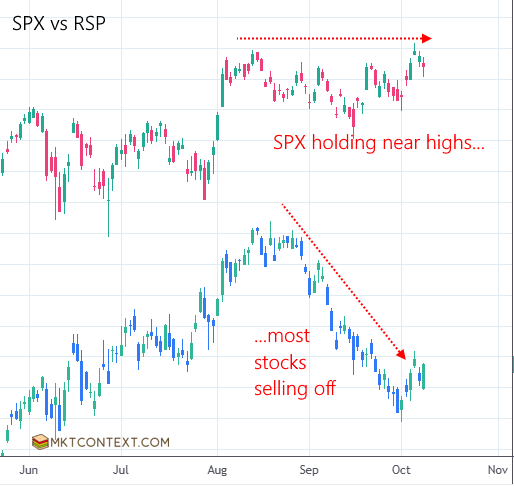
There are two ways bad breadth can resolve:
Interest rates and oil prices fall. The rally “broadens out” to other sectors, with the laggards catching up to the index.
Macro pressure becomes unbearable. Tech stocks stall out and catch down to the rest of the market.
We lean more toward the first camp: given easing interest rates, the strong economy, and strong earnings, the non-tech stocks should be able to recover back to highs.
A few of our oversold indicators are starting to fire as well. Historically, these were levels where rebounds often start:
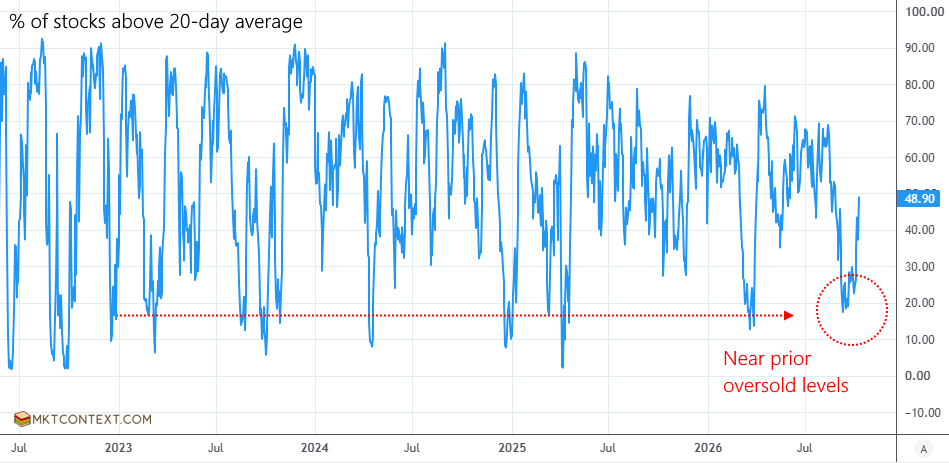
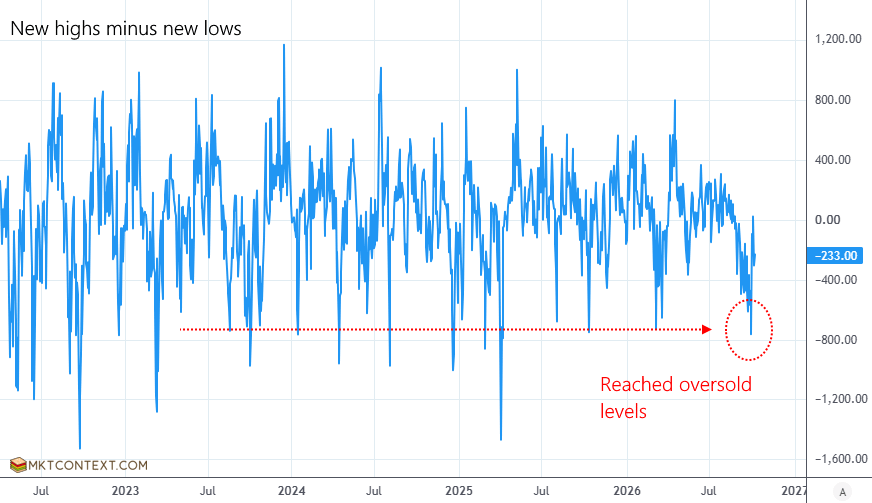
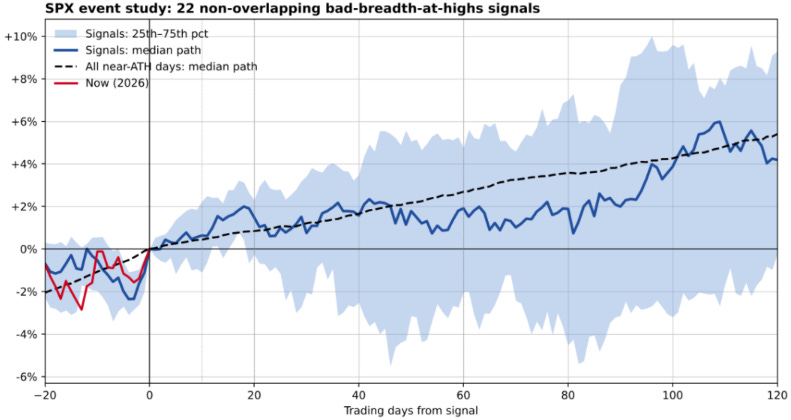
While narrow breadth is typically a signal of underlying weakness, that ceases to be true when SPX stays near highs. Here is a study of such prior instances. Contrary to what one might believe, the broader market kept rallying.
Technical analysis
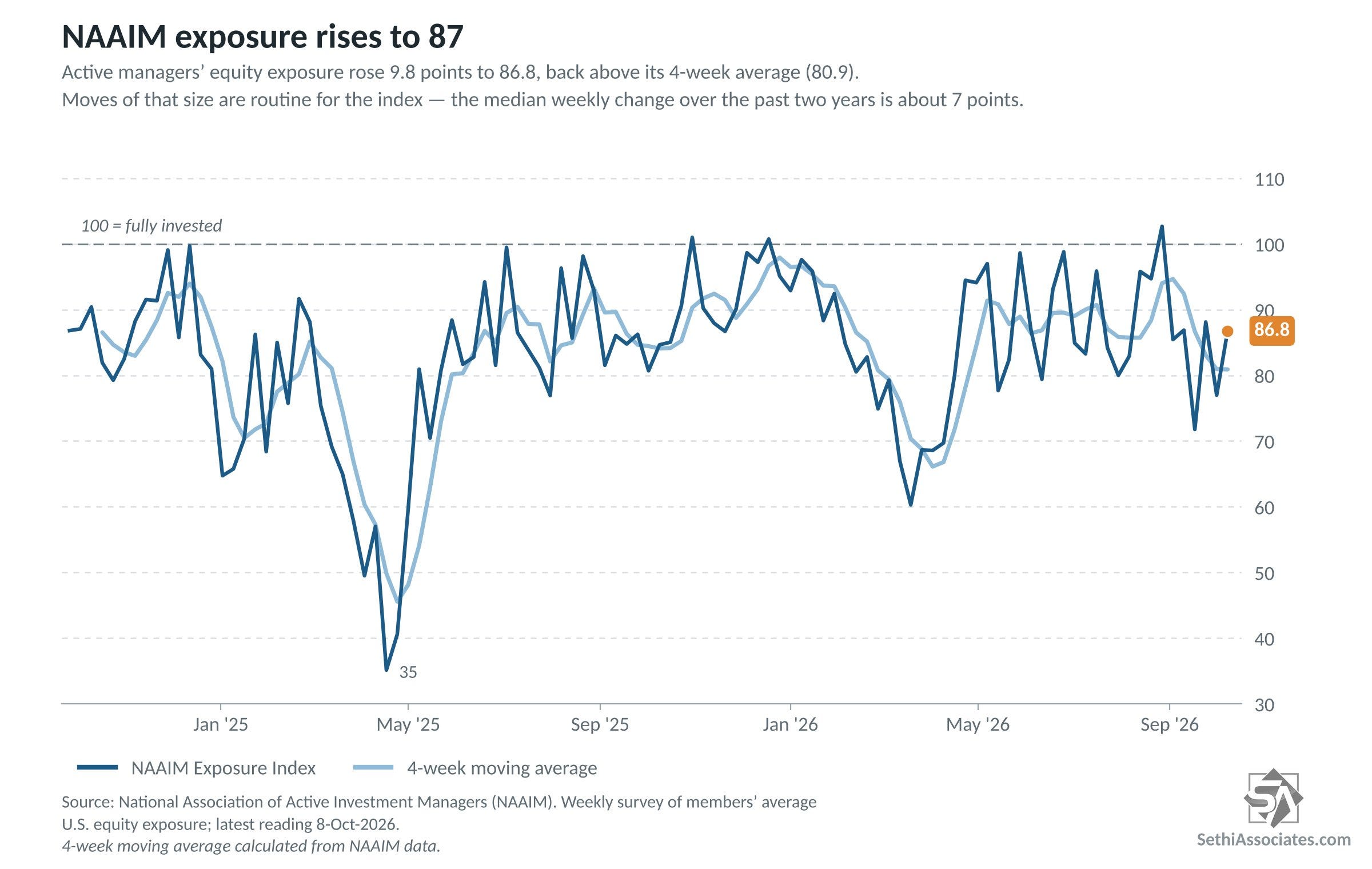
Consistent with the “partial” bear market, investor positioning is at moderate levels. A reading of 86.8 means there’s still room for people to get long and bid up the market. That’s potentially bullish.
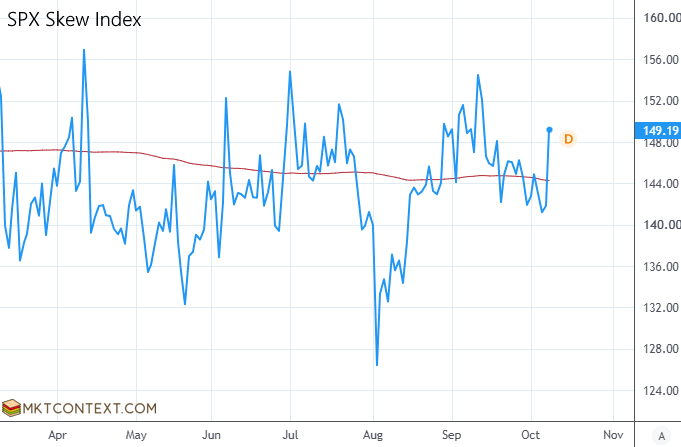
The Skew index is climbing again, reflecting nervousness among investors. Skew measures the cost of downside Put Option protection. Readings above 150 typically signal a stalling market or looming pullback.
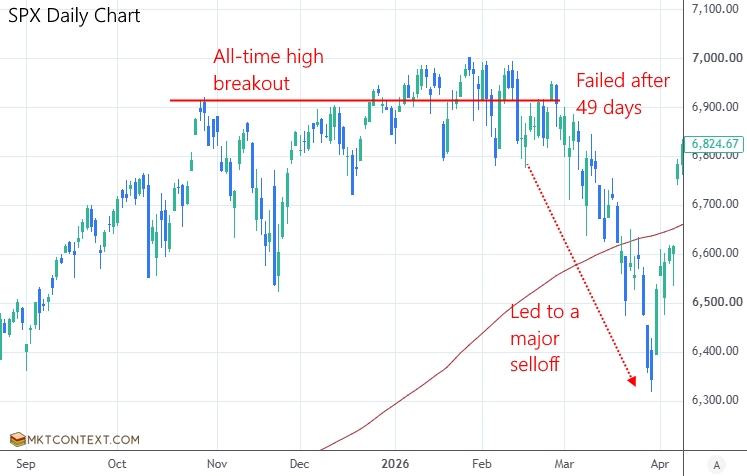
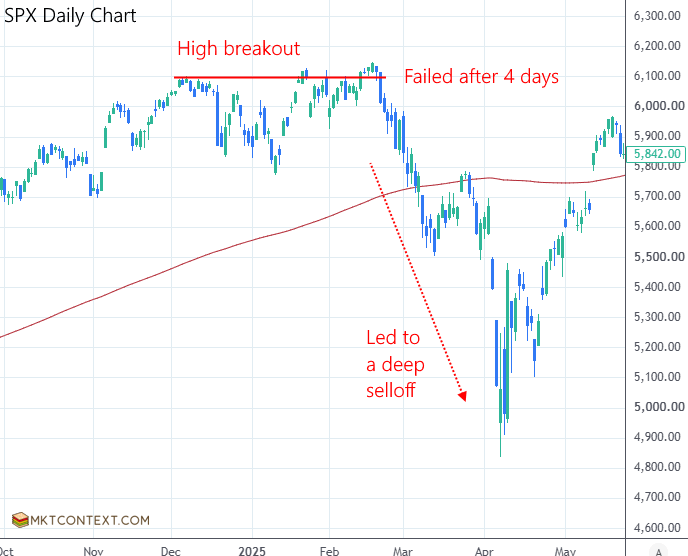
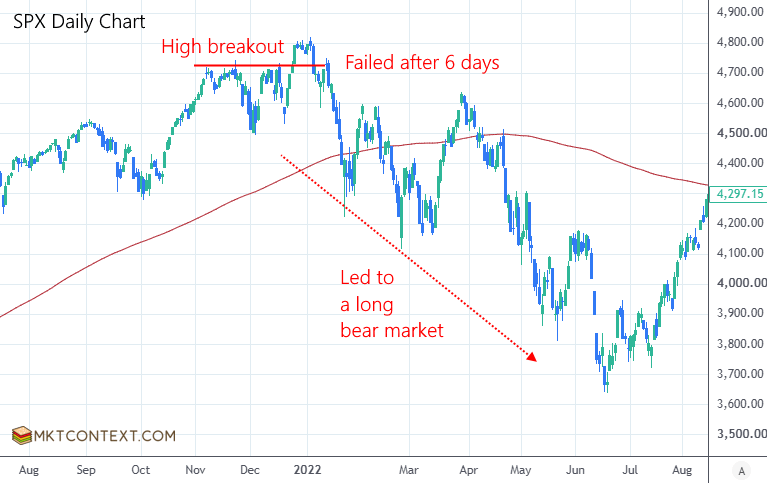
Our primary concern is whether Nasdaq and SPX can stay above the new highs after having broken out. The next few weeks will be an important test. It is already somewhat concerning that SPX instantly fell back below the breakout level.
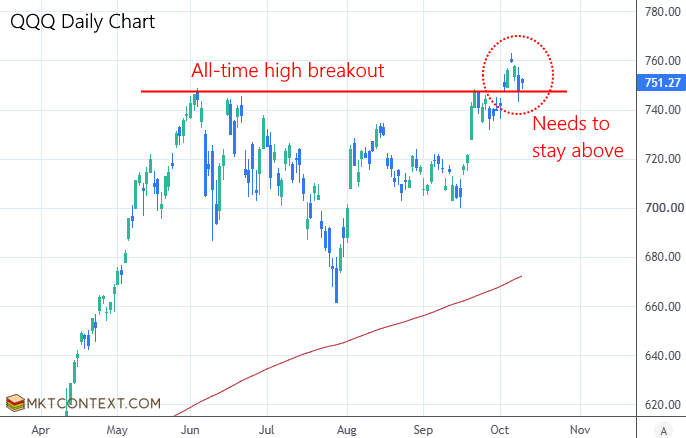
In recent years, when the indexes have failed to sustain an all-time high breakout, it has resulted in a longer-lasting bear market. Some examples:
Stocks to watch
Continuing from last week’s theme of the resilient consumer, we look to the travel and entertainment sector for oversold stocks. Hotel & lodging stocks have been stagnant for several months due to concerns about consumer sentiment and willingness to travel.
For several years, Airbnb (ABNB) battled slowing growth and market saturation. Rather than cut costs, management reinvested capital into international expansion, platform enhancements, and new guest experiences. These initiatives were slow to pay off, which led to a multi-year consolidative Cup & Handle pattern:
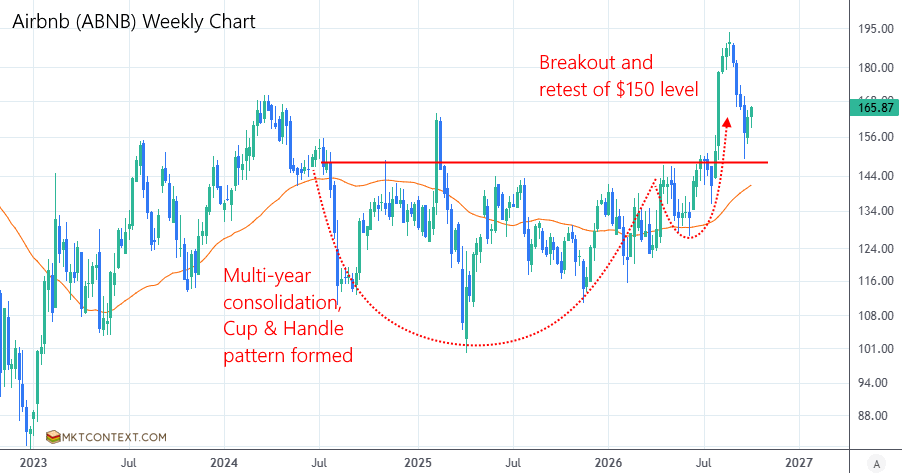
The catalyst: On August 6, the company reported robust Q2 earnings results, proving their reinvestment initiatives are paying off. They are also working together with hotels now (previously it only listed private homes). The company’s vision is to be the go-to hub for travel planning.
The stock gapped up 18% on earnings day, well above the $150 level that was resistance for several years. It recently bounced off the level and is continuing the uptrend.
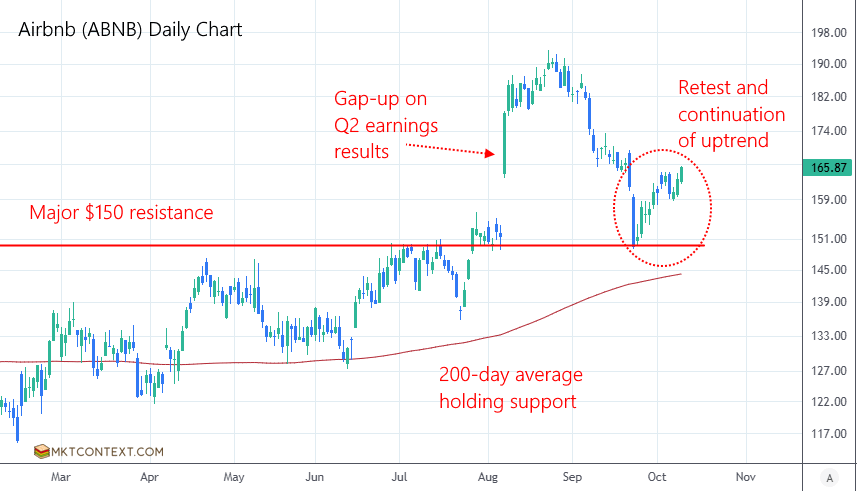
We would buy on the next pullback, targeting a price of at least $220, its post-IPO high watermark. Our stop-loss goes under the $150 breakout level. This should provide a very attractive reward-to-risk ratio of about 4x.
Our portfolio
Given the crowding in tech stocks, and the potential rebound in market breadth, we are switching 30% of QQQ to IWM. Our final portfolio will be 50% SPX, 30% IWM, 20% QQQ.
As a reminder, we first switched from IWM to QQQ in early September, when tech stocks were oversold and small caps were vulnerable to interest rate hikes. This proved timely; in just one month, QQQ has outperformed IWM by 11%.
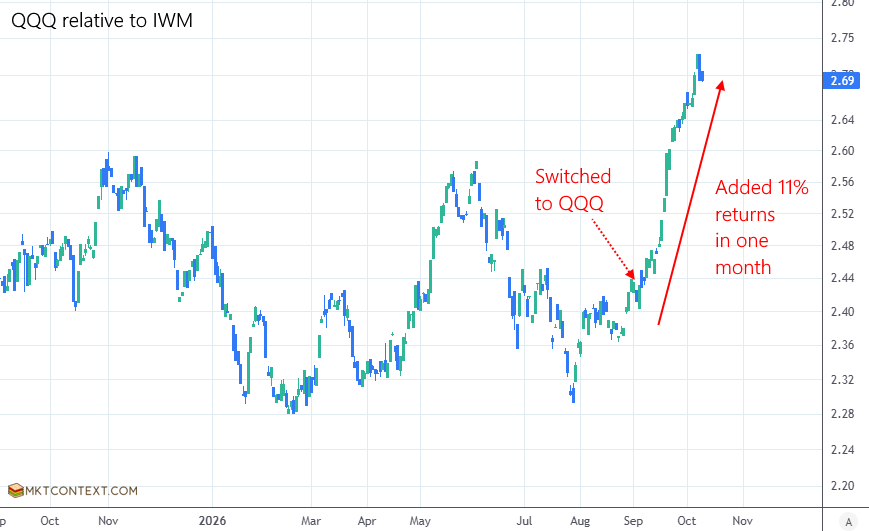
The rotation has gone too far, too fast, which is why we’re switching some back to IWM. We are betting that the rotation will reverse itself once investors become more comfortable with the current macro environment.
Meanwhile, we’re keeping our position in SPX as the interest-sensitive parts of the index should benefit from the rate normalization.
That’s all for this week!
Thanks for being a loyal subscriber. If this post helped your portfolio, please share it with someone else!
Disclaimer: This publication is for educational purposes only. The authors are not investment advisors and nothing here is investment advice. Always do your own due diligence.